

The stress starts before the car arrives.
Your flight lands at LAX, SNA, or LGB, and the next step feels loose. You open an app. You refresh. You watch the pickup point change. You wonder if the driver will cancel, circle the terminal, or call from the wrong level.
That tension isn't a planning mistake. It's what bad systems create.
In Orange County, airport travel looks simple on paper and turns noisy in life. Disneyland pickups, cruise terminal drop-offs, and executive airport runs all break down in the same place. The ride itself gets left to chance.
People don't need more travel drama. They need logistical silence. They need a ride plan that stays calm when flights shift, traffic builds, and airport curbs get crowded.
That Familiar Feeling of Airport Uncertainty
The hard part of airport travel isn't solely the flight.
It's the moment after landing, when you're standing under bright terminal lights, checking your phone, and trying to work out if the next part of the day is still on track. A meeting in Orange County. A hotel near Disneyland. A car to the cruise terminal. The plan should feel settled, and instead it feels loose.
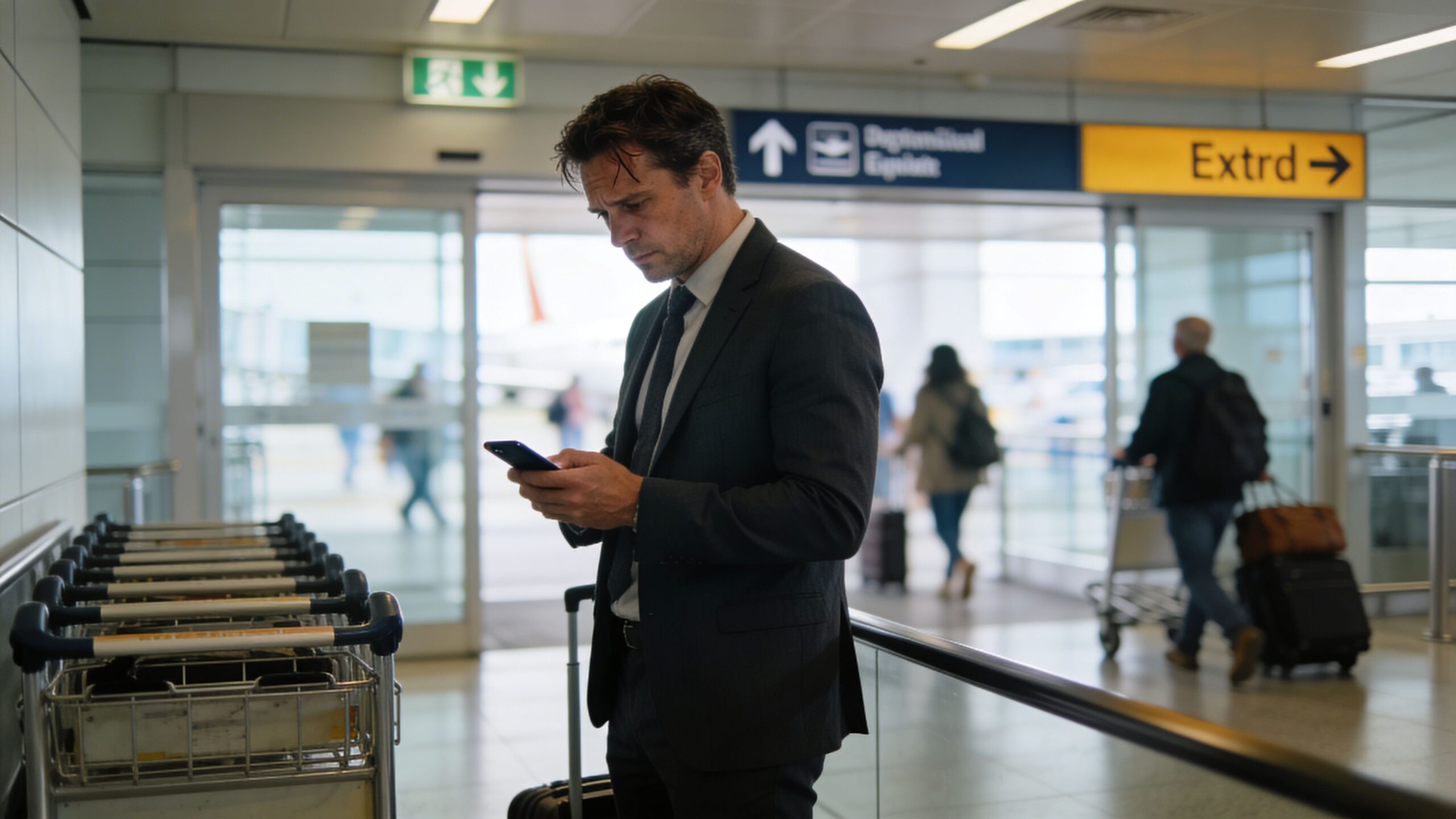
The stress starts in small ways
At LAX, the curb is crowded and noisy. At SNA, things move faster, and that can create a different kind of pressure. At LGB, the airport is simpler to get around, but that doesn't mean the ride is more certain.
The same thoughts show up every time:
- Will a car be available
- Will the driver know where to go in Orange County
- Will this turn into a delay I now have to manage
- Will I arrive settled, or already behind
For many travelers, this has become normal. It shouldn't be.
Practical rule: If the ride plan only begins after you land, the system is already late.
A lot of people heading into Orange County from Los Angeles airports are carrying more than luggage. They are carrying a schedule. Maybe it's a hotel check-in before Disneyland. Maybe it's a boardroom arrival. Maybe it's a transfer tied to a cruise departure time. The ride isn't a side detail. It's the bridge that holds the whole day together.
Why this feels worse than it should
Modern travel tools promise convenience. They do not provide certainty.
That is the core problem. The passenger does what they're supposed to do. They book the flight. They carry the confirmation. They show up on time. Then the ground ride gets handed over to a system built around availability, not accountability.
Luxe elite transportation sits in a different category for travelers who want the ride handled before the airport stress begins. A planned black car service for LAX makes sense because it removes the question mark, not because it adds flair.
And that question mark matters more than people admit. It follows you through the terminal. It changes how you answer calls. It keeps your eyes on the map instead of on what comes next.
The Hidden Flaws in On-Demand Airport Rides
On-demand apps were built for general convenience.
That design works well enough for casual trips across town. It breaks down when the ride has to support a fixed schedule, an airport handoff, or a time-sensitive arrival in Orange County. The weak point isn't the rider, and it isn't the driver. The weak point is the algorithm.
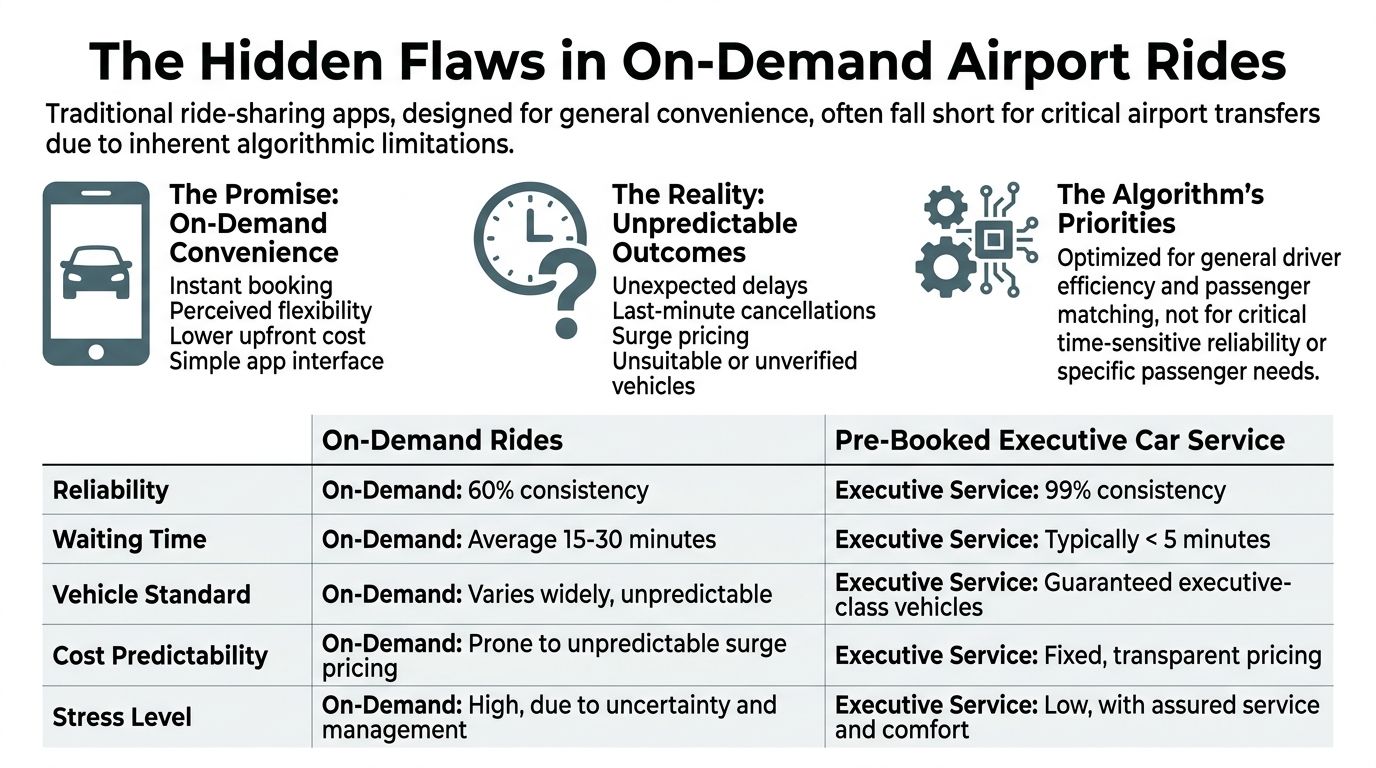
What the app promises
The screen looks clean. A car appears nearby. The process feels easy.
That simplicity is why so many travelers trust it right up until the moment it stops being simple. Airports expose every weak part of the on-demand model. Curb rules change. pickup zones shift. traffic stacks up. drivers accept and cancel. the app keeps trying to rebalance supply and demand, and the traveler absorbs the stress.
Where the system fails
❌ The ride can disappear
A driver can accept, then cancel. The passenger goes back into the queue and starts over.
❌ Timing stays unstable
Estimated arrival times move around. At an airport, a few minutes of drift can reshape the whole handoff.
❌ Vehicle quality varies
You may get a clean, quiet car. You may not. That uncertainty matters when you're traveling with clients, luggage, or work to finish.
❌ No single person owns the outcome
The app manages the match. The driver manages the trip. The passenger manages the risk.
❌ Airport pickups become a scavenger hunt
Large terminals create confusion fast. If the driver isn't skilled with airport pickup patterns, the passenger pays in time and frustration.
The app isn't built around your meeting, your family schedule, or your cruise boarding window. It's built around fast matching.
On-Demand Apps vs. Scheduled Service A Comparison
| Feature | On-Demand Apps (The Chaos) | Scheduled Service (The System) |
|---|---|---|
| Driver commitment | May change at the last minute | Assigned before the trip |
| Pickup planning | Starts after request | Built before travel day |
| Airport awareness | Depends on the individual driver | Based on managed pickup process |
| Accountability | Split across app and driver | One service owns the plan |
| Traveler workload | You keep checking and adjusting | Most of the logistics are handled |
This is why many frequent travelers stop treating airport rides like casual errands. They start treating them like logistics.
A pre-arranged driver for hire in Orange County isn't about status. It's about replacing app behavior with an actual service model.
What works and what doesn't
What doesn't work is hoping the algorithm values your schedule as much as you do. It doesn't.
What does work is a ride built around known details. Flight number. Airport. terminal pattern. luggage needs. destination. timing buffer. human follow-through.
When the trip matters, convenience alone is too weak a standard. Reliability has to be designed into the ride before the plane leaves the gate.
Why Taxis and Shuttles Create Different Problems
Some travelers give up on apps and fall back to taxis or shared shuttles.
That seems reasonable. It feels more direct. In practice, it often creates a new version of the same old problem. The ride still isn't built around your exact schedule.
Taxi lines trade one unknown for another
A taxi queue can look orderly. The experience still depends on chance.
You don't know which vehicle arrives next. You don't know how clean it will be. You don't know whether the driver is used to hotel runs near Disneyland, executive stops in Orange County, or a timed transfer to the cruise terminal. You also don't know how long the line will move once a bank of flights empties into the pickup area.
That system asks the passenger to accept whatever shows up next.
Field note: Waiting in a line after a long flight doesn't create control. It only delays the moment the next uncertainty begins.
For important travel, that random handoff is the issue. A traveler heading to a board meeting and a family heading toward Anaheim both need the same thing. They need the ground leg of the trip to be settled before they touch down.
Shared shuttles are built for pooled timing
Shuttles solve a different problem. They are built to move several people in one operating pattern.
That means delays aren't a side effect. They are part of the design.
❌ Multiple stops slow the trip
Other passengers have different hotels, terminals, and timing needs.
❌ The route bends away from your schedule
The shuttle goes where the group requires.
❌ Quiet disappears fast
Phone calls, rest, and focus become difficult in a shared cabin.
A private shuttle service works better when the route needs to stay dedicated to one traveler, one family, or one group with one agenda.
The Key Difference
Taxis depend on what's next in line.
Shuttles depend on everyone else's stop.
Neither one gives the traveler full control over timing, pace, and privacy. For airport transfers tied to LAX, SNA, LGB, Disneyland, or the cruise terminal, that compromise tends to show up at the worst moment.
The True Cost of Unpredictable Arrivals
A traveler lands with a meeting in 45 minutes, baggage is in hand, and the ride plan is still uncertain. At that point, the problem is no longer transportation. It is operational drift, and it follows the traveler all the way to the destination.
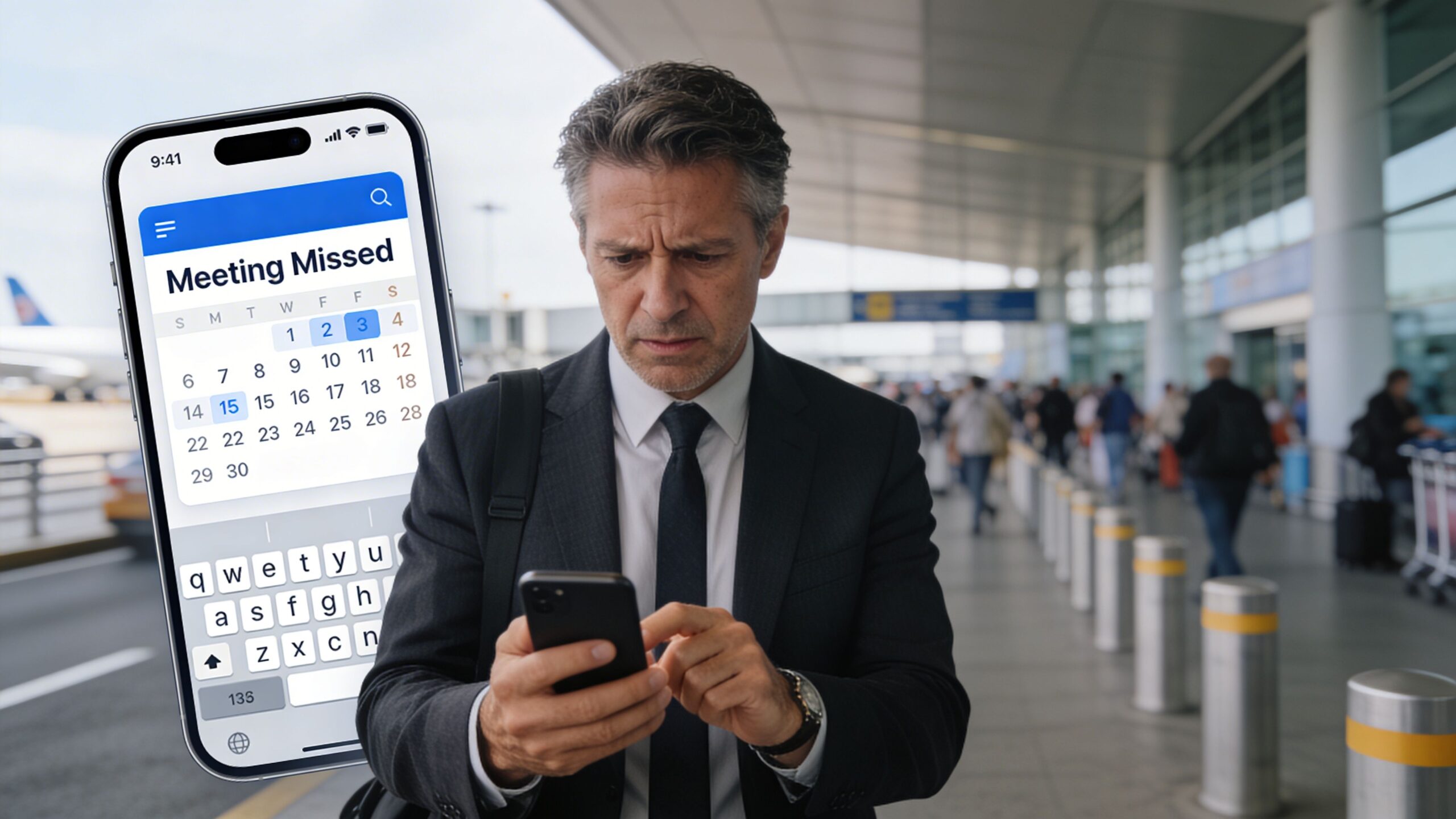
Stress changes the quality of arrival
Arrival time matters. Arrival condition matters just as much.
Two travelers can reach the same hotel, office, terminal, or residence within minutes of each other and still show up in completely different shape. The traveler whose pickup stayed uncertain arrives mentally split between the room ahead and the problem just solved. Attention is already spent on texts, missed calls, curb instructions, app updates, and revised timing.
That shows up fast:
- Meetings start colder because the traveler walks in distracted instead of prepared
- Family plans tighten up early because uncertainty at the airport sets the tone for the day
- Client pickups look disorganized because the first handoff feels loosely managed
- Cruise departures carry more pressure because every delay now has less room to recover
This is the part many people underestimate. A poor pickup does not end at the curb. It carries into the next room.
Unpredictability creates extra labor
On-demand ground transportation turns the passenger into the backup coordinator. Someone has to watch the app, answer calls from an unfamiliar number, explain the terminal, confirm the vehicle, recalculate the ETA, and update the person waiting on the other end.
That work is small in isolation. In practice, it breaks the trip into a series of avoidable decisions.
For executive assistants, travel managers, and hosts arranging arrivals for other people, the cost is higher. They are not only managing transportation. They are managing the reputation hit that comes with a loose arrival. If a VIP guest is waiting at the curb with no clear handoff, the transportation failure becomes a visible planning failure.
When pickup is not settled in advance, the traveler absorbs the noise of the system.
That is the opposite of control.
Southern California makes weak systems fail faster
This region exposes every flaw in an unplanned arrival. Airport access patterns change. Traffic density shifts by the hour. Event calendars, freeway slowdowns, terminal congestion, and long transfer distances all compress the margin for error.
In a quieter market, an improvised ride can sometimes recover. In Southern California, recovery often costs more than the original delay. A late pickup can turn into a late check-in, a shortened client meeting, a missed first hour of an event, or a rushed transfer to a cruise terminal or resort area.
The primary cost is not the fare difference between one ride type and another. It is the loss of logistical silence.
A controlled trip keeps transportation in the background, where it belongs. An unstable pickup makes the ride the main event, and that is usually where the day starts to slip.
The System for Predictable Travel
A reliable airport transfer starts long before the plane lands.
The scheduled model used by Luxe Elite Transportation is built to reduce handoff failures before they happen. The core controls are straightforward: chauffeur assignment is set in advance, flight progress is monitored, pickup timing is confirmed early, and routing is adjusted as traffic and airport conditions change around LAX, SNA, and LGB.
That changes the job of ground transportation.
Instead of asking the traveler to solve problems at the curb, the system handles the predictable points of failure upstream. Driver availability is settled early. Arrival timing is watched. Route decisions are made with current conditions in mind, not guessed after the pickup window starts slipping.
In operations terms, that is the difference between reaction and control.
A scheduled service works because responsibility is clear before the travel day gets busy:
- Chauffeur assignment happens before arrival
- Flight timing is monitored continuously
- Pickup instructions are organized ahead of time
- Route adjustments are made as conditions change
On-demand rides wait for the disruption, then try to recover.
Scheduled chauffeur service prevents part of that disruption from reaching the traveler in the first place. That is how trips stay calm, predictable, and free of the usual transportation noise.
Your Private Space for Productivity or Calm
Once the logistics are settled, the vehicle starts to matter in a different way.
It isn't about showing off. It's about having a space that supports the reason for the trip. Some people need to work. Some need to get quiet before the next stop. Both needs are practical.
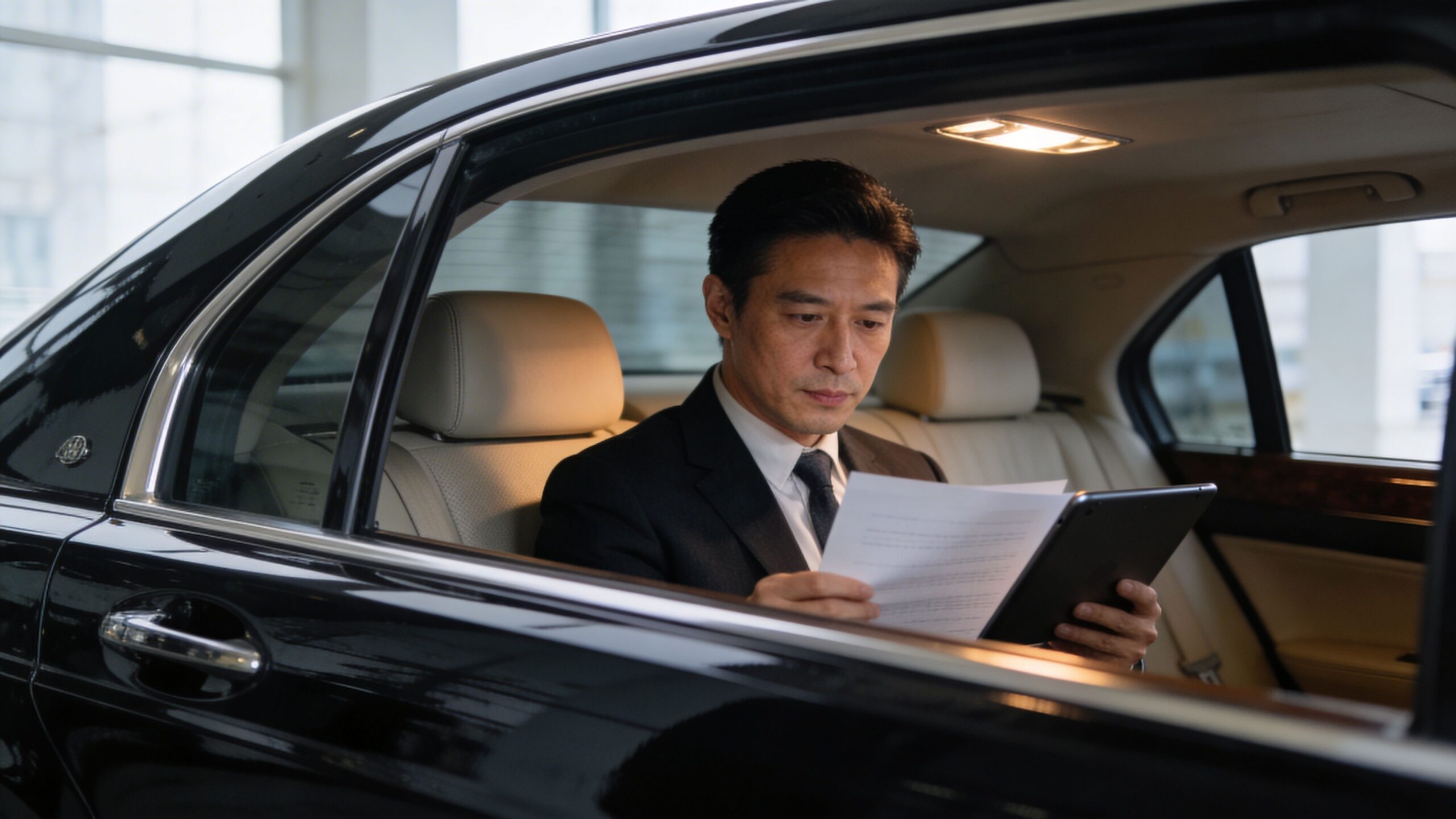
A cabin that serves a purpose
The fleet includes late-model luxury sedans, executive SUVs, and Mercedes Sprinters. Inside, the setup is meant for use, not decoration. Leather interiors, Wi-Fi, charging ports, and generous luggage space help the ride stay organized and quiet.
That matters on common Orange County routes:
- LAX to Orange County can become work time instead of dead time
- SNA arrivals can stay calm and direct
- LGB transfers can feel private and settled
- Disneyland runs can keep bags, devices, and people contained without friction
- Cruise terminal pickups can handle luggage without guesswork
Why privacy changes the ride
A quiet cabin gives people options.
An executive can review notes. A travel manager can stop checking in every few minutes. A family can decompress after a long flight without sharing space with strangers. The value isn't extravagance. The value is control over environment, pace, and attention.
A well-set vehicle turns travel time back into usable time.
Professional chauffeurs also matter here. Luxe Elite states that chauffeurs are background-checked and professionally trained, with an emphasis on discretion and polished service. That changes the tone of the ride in ways passengers feel right away, especially when the trip involves clients, senior staff, or any arrival where composure counts.
How Booking Gives You Full Control
Control starts before travel day.
The booking process works best when it acts like a planning tool, not a request sent into the void. You choose the route or hourly need, select the right vehicle, and receive instant confirmation with live updates. If a flight changes, the system adjusts with it.
What a stable booking process should include
A defined trip plan
Airport, destination, timing, and vehicle are set in advance.Clear confirmation
You should know the ride is placed, not just requested.Live trip handling
Flights move. Good systems keep watching. Public flight status tools such as FlightAware flight tracking help show why active monitoring matters.A fit for the traveler
A solo executive may want a sedan. A family Disneyland arrival may need an SUV. A group heading to the cruise terminal may need more room.
Corporate travel managers also need structure around repeat bookings. A centralized process makes executive scheduling easier to oversee and easier to repeat without starting from scratch each time.
If you want to plan this properly, you can review options through the booking system and choose the level of structure that fits your schedule.
Common Questions About Scheduled Chauffeur Service
People ask practical questions first. That's a good sign. It means they want the ride handled correctly.
How far ahead should you book
Earlier is better when the trip matters.
Airport travel works best when the details are placed before the day gets noisy. That gives the service time to align the chauffeur, the pickup pattern, and the route around your actual schedule instead of reacting late.
How do airport pickups work at busy locations
The key is communication and planning.
At large airports like LAX, pickup details need to be clear before arrival. At smaller airports like SNA and LGB, the process may feel easier, and it still helps to know exactly where the handoff is happening. A managed service gives the traveler a defined plan instead of a vague meeting guess.
What if the flight changes
A planned system should keep watching the flight and adjust.
That removes the burden from the traveler. You shouldn't have to land and start rebuilding the ride from your phone.
Is this only for executives
No. The same planning logic helps many kinds of travelers.
That includes Orange County residents, families heading to Disneyland, travelers going to the cruise terminal, and anyone who wants a private ride that stays quiet and organized. You can review the full service details on the Luxe Elite Transportation website.
If the goal is a calm arrival, the pattern stays the same. Plan early. Keep one accountable service on the trip. Let the ride stay predictable.
If having your airport transportation handled discreetly and correctly is a priority, you can explore booking options with Luxe Elite Transportation.