

Long distance car service starts mattering when the trip is too important for guesswork.
You know the feeling. The bag is packed. The calendar is tight. The pickup time keeps moving around in your head.
For Orange County travelers, the stress usually starts long before the road does. It starts when you think about LAX traffic, airport timing, app delays, curbside confusion, luggage, family logistics, and the quiet fear that one small miss will affect the whole day.
That pressure isn’t personal. It comes from bad systems. Too many travel options are built to react after something goes wrong. They don’t remove uncertainty. They make you manage it.
A proper long distance car service does the opposite. It reduces noise. It gives the trip a plan, an owner, and a method. For airport runs to LAX, SNA, and LGB, for Disneyland arrivals, for cruise terminal departures, and for executive travel across Southern California, the outcome isn’t only transportation. It’s logistical silence.
That Familiar Feeling Before a Long Drive
A traveler in Orange County with a morning flight out of LAX usually isn’t worried about the drive itself.
They’re worried about everything around it.
Will the pickup be late. Will the app driver cancel. Will the 405 lock up. Will the luggage fit. Will there be enough time at the terminal. If the flight changes, who’s even watching.
That spiral is common because long-distance travel is common. Americans make about 2.6 billion long-distance trips each year, and nearly 90% happen by personal vehicle, according to the Bureau of Transportation Statistics overview of long-distance transportation patterns. That tells you something simple. Most important trips still depend on the road, and the road asks people to carry too much mental load.
The real strain starts before the key turns
A trip from Newport Beach to LAX can look easy on a map.
In real life, it asks for timing, route judgment, pickup coordination, terminal awareness, and backup thinking. The same is true for a family heading to Disneyland from LAX, a couple leaving Orange County for a Long Beach cruise terminal, or an executive going south for meetings and returning the same day.
None of that stress means the traveler is disorganized.
It means the system around them is loose.
The worst travel days usually don’t begin with a big failure. They begin with small unknowns piling up before sunrise.
Southern California adds its own noise
Orange County travelers deal with a very specific kind of uncertainty.
The route may be short in miles and heavy in consequence. LAX can punish a late start. SNA is simpler to get through, and timing still matters. LGB is simple until luggage, family coordination, or event traffic enters the picture. Cruise terminal departures come with fixed boarding windows, and fixed windows don’t care why a ride fell apart.
A self-drive plan can work.
An app can work.
A taxi can work.
And when the trip matters, “can work” usually isn’t enough.
That’s where the idea of long distance car service changes. It stops being about status and starts being about control. The value is quiet. No one is improvising. No one is texting updates from a curb. No one is trying to solve timing while already late.
The Unseen Chaos of Modern Travel Options
A traveler leaves Orange County at 5:15 a.m. for an airport run that should be routine. The car is booked. The bags are packed. Then one small variable slips. The driver changes, pickup timing softens, the vehicle is tighter than expected, or the curb plan is unclear. Nothing has fully failed, but the traveler is already doing mental work that should have been settled the day before.
That is how modern travel systems create noise. They leave too many details open until the last minute.
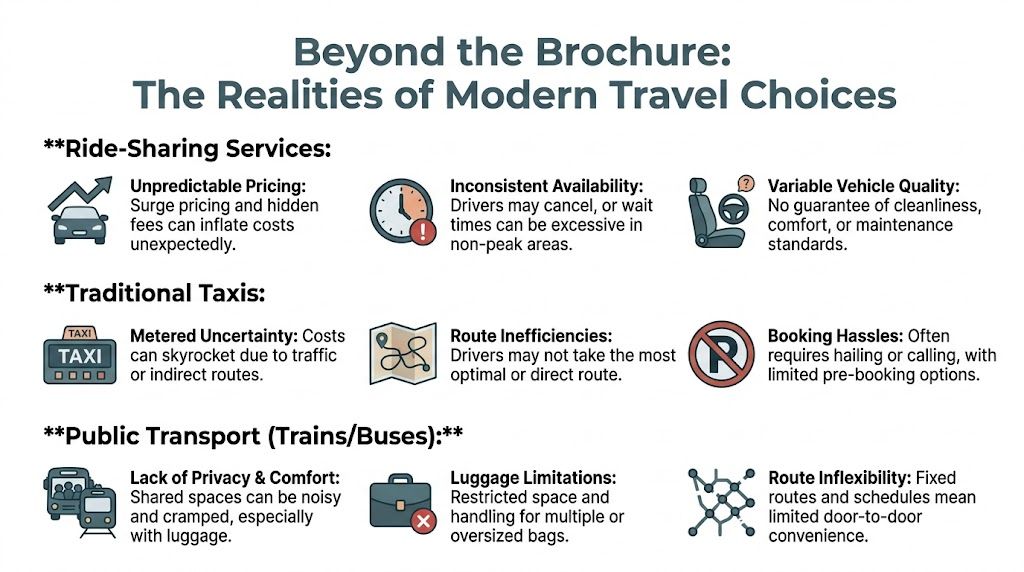
Ride-share apps look easy and behave inconsistently
Ride-share apps are useful for ordinary local trips. For airport transfers, intercity runs, and schedule-sensitive travel, they often push risk back onto the passenger.
The issue is not the map on the screen. The issue is that the trip is built on a live marketplace. Driver availability shifts. Acceptance changes. Vehicle quality varies. If something goes sideways, the passenger ends up managing the gap.
❌ Availability is never fully settled
A driver can accept, stall, cancel, or show up in a vehicle that does not fit the luggage count or the tone of the trip.
❌ Price certainty can disappear
Demand spikes happen on the system’s schedule, not yours. Calm tends to matter most when rates and wait times start moving.
❌ The passenger becomes the backup plan
When timing changes, the passenger has to handle support, timing, curb communication, and the next option under pressure.
✅ What careful travelers usually want instead
An assigned chauffeur, confirmed ahead of time, with the vehicle and pickup plan already matched to the trip.
Traditional taxis still rely on old friction
Taxis still have their place. For planned transportation in Orange County, especially to LAX, SNA, LGB, Disneyland, or a cruise terminal, they rarely remove enough uncertainty in advance.
A taxi can get you from one point to another. That is different from giving you confidence the night before. Dispatch quality varies. Vehicle type may be unclear. Pickup coordination can feel loose. On a casual cross-town errand, that may be acceptable. On a departure with luggage, children, client expectations, or a hard boarding window, it is thin coverage.
Public transportation asks the traveler to absorb the complexity
Bus and rail systems work on shared schedules and fixed routes. That makes them useful for commuters and far less forgiving for travelers with bags, formal clothing, family logistics, or early departure times.
Each transfer adds another exposure point. Parking at the station. Waiting on the platform. Watching the clock. Moving from train to shuttle, then shuttle to terminal or hotel. I have yet to see that chain create quiet for someone catching a flight or boarding a ship on a fixed timeline.
❌ The route is fixed
The traveler adapts to the system.
❌ The handoffs multiply
Each transfer creates another place for delay, confusion, or missed timing.
✅ What works better for important travel
One vehicle, one pickup plan, and one accountable party from door to destination.
Self-driving looks cheaper because it hides the workload
Driving yourself to LAX or San Diego can look like the sensible option until you count what the traveler is carrying.
Departure timing becomes your judgment call. Traffic concentration stays with you the entire way. Airport rules, parking decisions, terminal access, and the return burden stay on your plate. Even if everything goes well, the traveler arrives having already spent attention that may be needed elsewhere.
The practical rule is simple. If the passenger has to personally absorb every variable, the transportation plan has not reduced risk. It has just assigned it to the wrong person.
A better way to compare the options
| Method | Primary Weak Point | Typical Outcome |
|---|---|---|
| Ride-share app | Live driver pool and reactive dispatch | Uncertain pickup, uneven vehicle fit, added mental load |
| Traditional taxi | Limited advance coordination | Less planning confidence, more guesswork |
| Public transport | Fixed schedule and multiple transfers | More handoffs, less privacy, weaker door-to-door control |
| Self-driving | Personal fatigue and traffic burden | Arrival with less focus, more stress, and no backup |
| Planned chauffeured service | Advance coordination and assigned responsibility | Clear timing, known vehicle, quieter trip |
What experienced travel planners look for
For important travel, the useful question is not which option is available in the moment.
It is who owns the outcome if one detail changes.
That standard changes the buying decision. Serious travelers and executive assistants stop treating transportation like a commodity and start treating it like a controlled part of the itinerary. That is why planned service consistently feels quieter. Fewer open loops. Fewer handoffs. Fewer chances for the passenger to become dispatcher, troubleshooter, and timekeeper.
For a closer look at how scheduled service is structured, this overview of chauffeured car services is useful.
What a Professional Long Distance Car Service Actually Is
A long distance car service isn’t just a nicer car.
It’s a managed travel system.
That distinction matters. Many people hear the phrase and think of luxury first. In practice, the strongest value is operational. A professional service exists to remove uncertainty before the pickup window begins.
It is scheduled transportation, not on-demand rescue
The trip is built around known details.
Pickup time is set. Route logic is considered. Vehicle type matches the passenger count and luggage reality. The chauffeur is a professional driver, not a rotating app user taking the next job on a screen.
That changes the feel of the trip immediately.
The traveler isn’t waiting to see which version of the system shows up. The system is already working on the traveler’s behalf.
Business travelers already treat it like infrastructure
This isn’t a niche habit. It’s a standard operating choice in many professional settings.
The U.S. limousine and town car services industry includes nearly 200,000 businesses, and corporate clients generate 52% of all revenue, according to IBISWorld’s limousine and town car services industry report. That tells you how the business world sees these services. Not as decoration. As dependable transport for people whose schedules can’t drift.
When a company books a car for an executive, it usually isn’t buying style. It’s buying fewer variables.
What it prevents matters more than what it offers
A professional long distance car service prevents a chain of small failures.
It prevents the wrong vehicle showing up for airport luggage.
It prevents a missed pickup caused by weak coordination.
It prevents the traveler from becoming the backup dispatcher.
It prevents the trip from depending on a stranger making a quick decision under app pressure.
That’s why this is often the adult choice. It accepts that travel is full of variables and puts responsibility in the hands of a managed system instead of a moving target.
In Orange County, that system solves local problems
This is especially useful when the route involves Southern California friction points.
Think about the common patterns:
- LAX transfers where timing needs to account for distance, terminal activity, and return uncertainty
- SNA pickups where speed matters and the traveler still wants a polished handoff
- LGB travel where the route is simple and the margin for sloppy planning still isn’t large
- Disneyland arrivals where families need space, timing, and calm after a flight
- Cruise terminal departures where luggage handling and fixed check-in windows matter
A professional service handles those as logistics, not surprises.
When the Journey Cannot Be Left to Chance
Some trips are flexible.
Others have one clean chance to go right.
That’s usually when people stop thinking in terms of “getting a ride” and start thinking in terms of “making sure this day stays intact.”
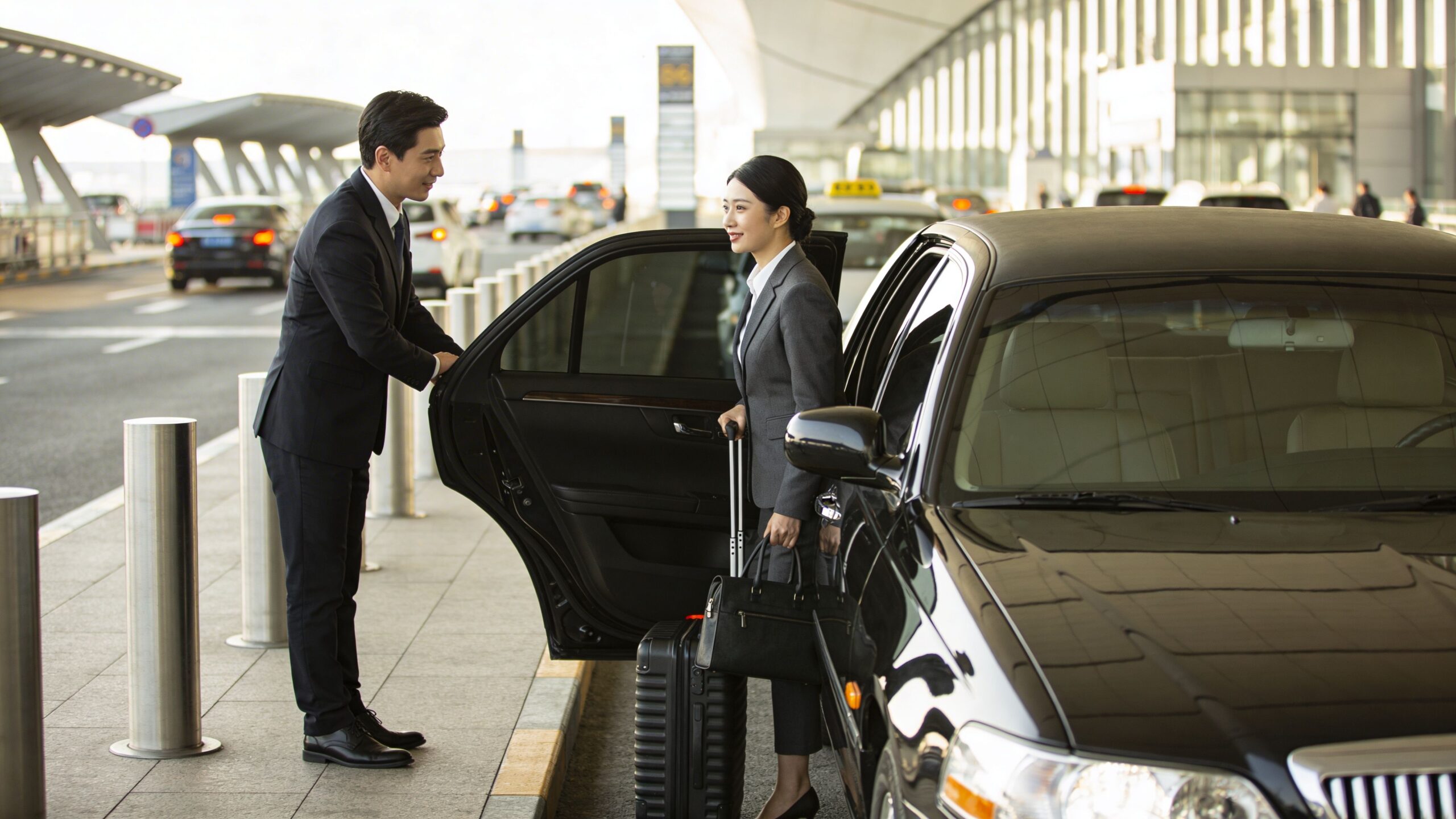
Airport runs where one delay creates three more
An Orange County departure to LAX often carries more than airport timing.
There may be a meeting before the flight. A handoff at home. Checked luggage. A child’s schedule. A return leg that lands late. If the outbound ride starts poorly, the rest of the day inherits that tension.
A planned car service handles the chain, not just the pickup.
The route is considered early. Departure time is chosen with the trip’s purpose in mind. The traveler isn’t doing mental math in the driveway.
The same logic applies to SNA and LGB. Those airports are easier to manage than LAX, and ease can create false confidence. A short route still needs precise timing if the passenger is a speaker, executive, family coordinator, or anyone who doesn’t want the morning consumed by transport problems.
Business travel that should preserve your attention
A drive from Orange County to San Diego for meetings sounds manageable.
It often becomes a hidden drain.
You drive in traffic, arrive with less focus, park, walk in, and try to be sharp after handling every part of the journey yourself. Then you repeat the process on the way back.
A proper long distance car service changes the purpose of the cabin. It becomes protected time. You can review notes, answer emails, take a call, or arrive with your attention still intact.
That matters more than people admit.
The road doesn’t only take time. It takes decision energy.
Disneyland trips that don’t need one more moving part
Families coming into Orange County through LAX, SNA, or LGB usually want the same thing.
They want the first hour to be easy.
That means enough space for luggage. A clear pickup. No curbside confusion. No guessing whether the next car can handle strollers, backpacks, and tired kids. It also means no pressure to solve transportation while everyone is already in transit.
The best family transfer is often the one no one remembers because nothing odd happened.
A planned service works well here because the itinerary is known. Hotel drop-off is fixed. Baggage needs are predictable. The adults don’t need to negotiate with an app while watching bags and counting children.
Cruise terminal mornings with no tolerance for drift
Cruise departures create a different kind of pressure.
Flights can move. Cruise boarding windows do not bend very much. If the road plan is weak, the whole vacation begins with monitoring maps and checking the clock every few minutes.
For Orange County travelers heading to a cruise terminal, the right service does more than provide a car. It accounts for luggage volume, pickup timing, and that cruise travel usually involves more bags, more documents, and less appetite for chaos.
That’s why these trips reward planning.
A casual transportation decision can work on a dinner reservation. It’s a poor tool for a cruise departure day.
Return trips matter just as much
People often focus on the outbound leg.
The return is where weak systems show themselves.
A late flight into LAX. A changed arrival at SNA. Fatigue after business travel. Children asleep after Disneyland. Cruise passengers coming back with more bags than they left with. These are not unusual events. They are normal travel conditions.
The right approach expects changes and absorbs them without disruption.
That’s what logistical silence looks like in practice. The passenger doesn’t chase updates. The ride plan stays attached to the trip, not to a perfect version of the schedule.
The Simple Mechanism for Predictable Travel
Most travel options fail for one reason.
They’re reactive.
❌ A ride-share app reacts to the market.
❌ A taxi reacts when called.
❌ Public transport reacts to its own schedule.
❌ Self-driving reacts to the road in real time, with the traveler carrying the full burden.
A professional long distance car service works because it’s proactive.
✅ The trip is scheduled around the actual requirement.
✅ The right vehicle is assigned before the day begins.
✅ The chauffeur is part of a controlled process, not an open marketplace.
✅ Timing, routing, and changes are managed as one system.
That’s the mechanism.
The ride isn’t left to chance, and the traveler isn’t asked to close the gaps themselves. For an Orange County airport transfer, a Disneyland arrival, or a cruise terminal drop-off, the car is only one part of the service. The larger part is oversight.
If the goal is peace of mind, that’s what works. Planning with human accountability. Not a loose chain of maybe.
How to Arrange Your Quietly Managed Journey
Once people understand the difference, the booking side usually feels simpler than expected.
A planned trip has fewer moving parts than an improvised one.
Start with the real shape of the trip
The useful details are basic.
Pickup address. Destination. Date and time. Passenger count. Luggage. Any special timing issue, such as a flight, hotel arrival, Disneyland check-in, or cruise terminal boarding window.
Those details aren’t bureaucracy.
They’re how the trip becomes stable.
If the traveler is heading from Orange County to LAX with two large bags and a tight departure window, that should shape the vehicle and schedule. If a family is arriving at SNA and going to Disneyland, the luggage count matters as much as the route.
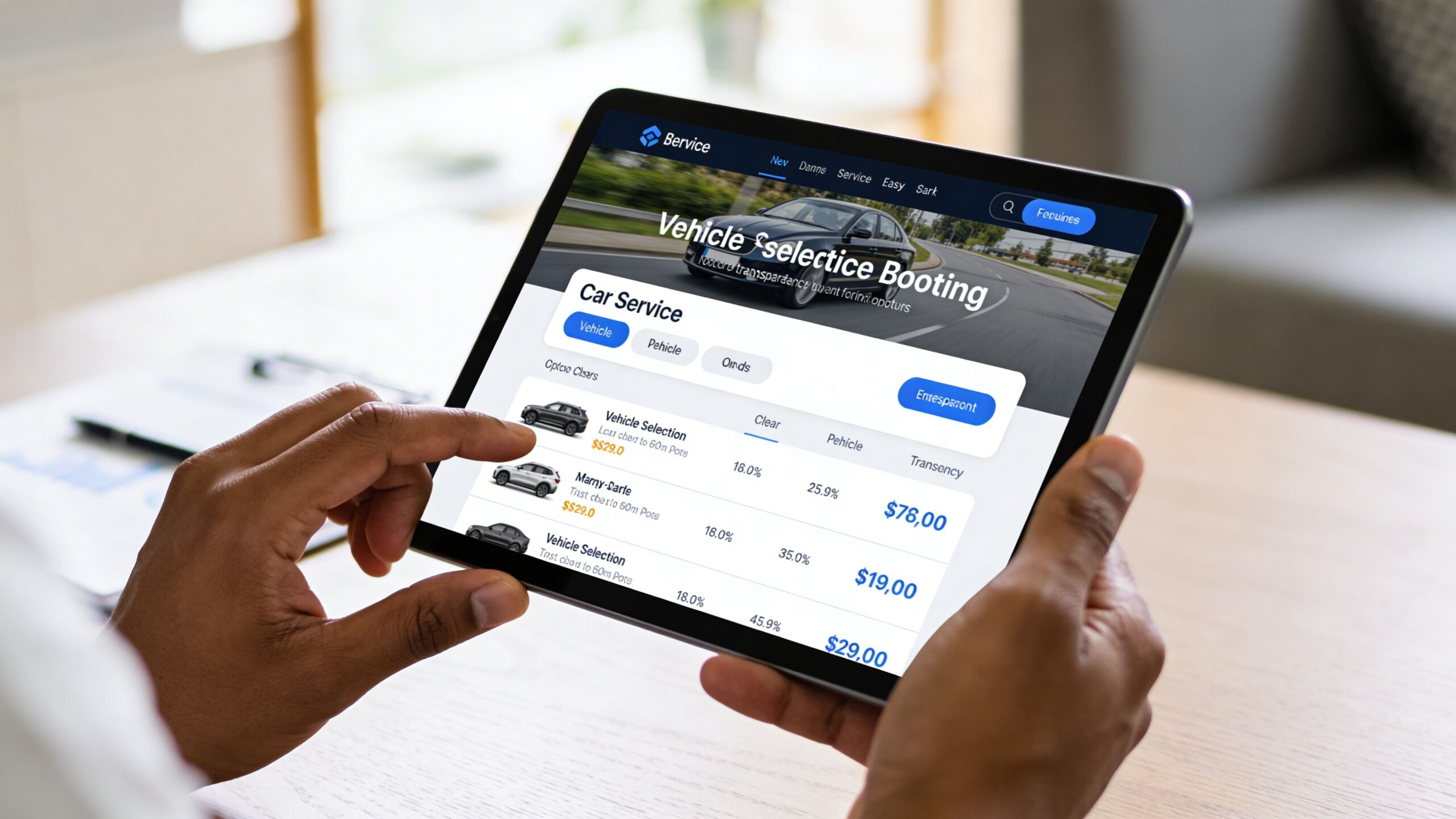
Clear pricing matters because uncertainty spreads
One of the quiet advantages of scheduled service is that the trip can be priced and understood ahead of time.
That removes a common source of friction. The traveler doesn’t have to watch the app, wonder about timing changes, or brace for moving costs tied to demand shifts and road conditions.
For longer airport and regional travel, that clarity supports better decisions. It lets the person booking compare vehicle fit, schedule fit, and service level without adding more guesswork.
If you want to understand how a planned regional ride is typically set up, this page on hiring a driver for long distance gives a useful reference point.
The booking process should feel calm
A professional process usually looks like this:
- You provide the route: Orange County to LAX, LGB to a coastal hotel, SNA to Disneyland, or home to a cruise terminal.
- The vehicle is matched to the trip: sedan, SUV, or Sprinter based on party size and bags.
- The details are confirmed: time, location, contact method, and any trip notes.
- The ride is monitored: the traveler isn’t left to improvise once the day starts.
That’s how the planning stays quiet.
No one needs a dramatic service experience. Travelers seek a trip that stays orderly from first confirmation to final drop-off.
The Hallmarks of a Truly Professional Service
The difference shows up before the wheels move.
For an important long-distance trip, the best service is the one that removes decisions, follow-up calls, and little doubts before they have a chance to appear. That is what professionalism looks like in practice. It creates logistical silence.
Start with accountability, not marketing
A polished website can suggest quality. It cannot prove operating discipline.
A professional provider uses properly licensed, commercially insured vehicles and chauffeurs who are screened, trained, and managed to a clear standard. On a longer route, that matters because the passenger is depending on judgment for hours, not minutes. The driver has to handle timing changes, pickup conditions, rest stops when needed, and the general tone of the trip without creating friction.
For executive and family travel, discretion is part of the job. So is restraint. A skilled chauffeur knows when to speak, when to stay quiet, and how to keep the ride settled.
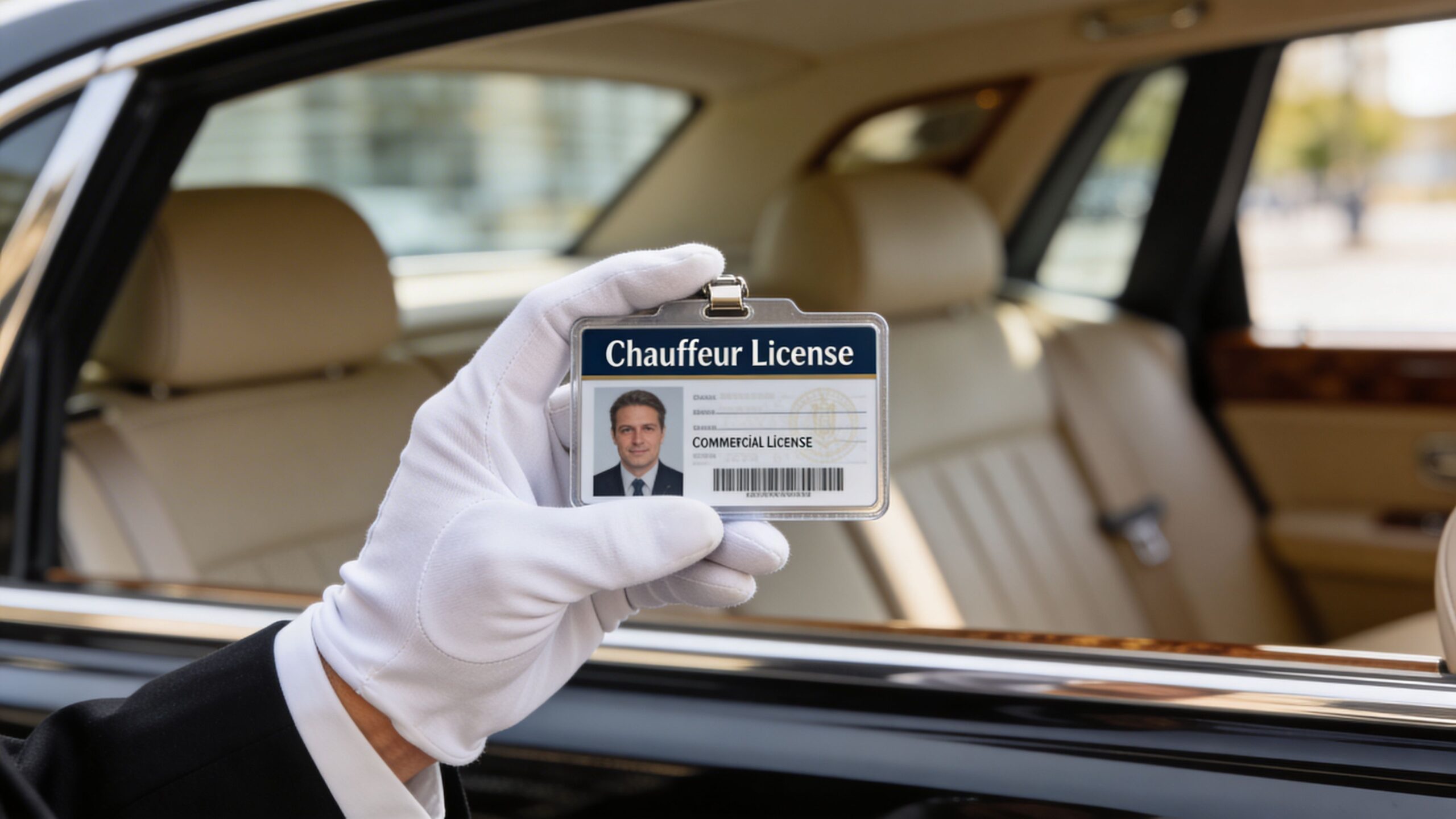
Vehicle preparation is operational, not cosmetic
A clean interior is expected. What matters more is whether the vehicle was prepared for assignment or happened to be open.
Serious operators run inspection routines before service. Tires, fluids, battery condition, lights, climate control, and cabin readiness should be checked as part of normal dispatch procedure. Good maintenance does not guarantee that nothing will ever go wrong, but it lowers the chance of preventable interruptions and gives the trip a better margin of safety.
That standard matters on every route. A 40-mile airport transfer and a multi-hour intercity ride both benefit from the same discipline.
What to ask: Was this vehicle prepared for my trip under a documented inspection routine, or was it just the nearest car available?
Small details reveal the real standard
Weak operators tend to focus on appearance. Strong ones control the parts of the trip that passengers notice only when they fail.
That usually includes a quiet cabin, working chargers, enough luggage room for the actual party, clean glass, clear confirmations, and a driver who already knows the access point instead of searching for it at arrival. It also includes vehicle assignment that matches the purpose of the ride. A sedan for one executive heading to a meeting is a different job from an SUV moving a family and five bags to a cruise terminal. If you want a practical baseline, this guide on what defines a luxury vehicle is a useful reference.
The broader point is simple. Professional service should make the trip feel uneventful in the best possible way. No confusion at pickup. No improvising en route. No extra mental load handed back to the traveler.
Your Questions Answered for Total Peace of Mind
The last hour before an important trip tends to surface the same questions. If the car is late, if the flight changes, if the luggage does not fit, the traveler becomes the backup dispatcher. A professional long distance car service is built to prevent that handoff.
What happens if my flight is delayed or lands early
The car plan should follow the flight, not the original booking estimate.
That means the operator watches the arrival time, adjusts dispatch timing, and updates the driver before the passenger has to start sending texts from the runway. For airport pickups, that is basic operating discipline. If your LAX arrival moves, the pickup plan should move with it.
Can I request a stop on the way
Usually, yes. The key is to treat the stop as part of the route plan, not a casual change made once the ride is underway.
A stop in Orange County before SNA, a hotel pickup before Disneyland, or a quick errand before a cruise terminal drop all affect timing, driver hours, and vehicle assignment. Good services ask for those details early because small additions can change the trip more than passengers expect.
How is luggage handled
Luggage is one of the easiest ways to turn a calm pickup into a curbside problem.
A sedan that works for one executive and a carry-on may fail immediately for a family with full-size suitcases, a stroller, and personal bags. Strong operators ask about bag count, size, and passenger count in advance. They do not guess. That matters even more at LAX, SNA, and LGB, where curb time is limited and there is little room to correct a bad vehicle match.
Is a long distance car service only for business travelers
No.
Executives use these services often because missed time carries a high cost. The same structure serves families heading to Disneyland, couples leaving for a cruise, older travelers who do not want the strain of parking and terminal transfers, and residents who want the day to stay quiet. The common need is not status. It is control.
How early should a trip be arranged
Earlier planning gives more options and fewer compromises.
It improves the odds of getting the right vehicle, the right pickup window, and any special handling the trip may require. Last-minute bookings can still work, but there is less room to solve around traffic patterns, airport timing, extra stops, or access restrictions at hotels and terminals.
What should I look for before booking
Look for signs that the company runs a controlled operation, not just a reservation line.
That includes a clear confirmation process, direct communication, vehicle choices tied to actual trip types, and a real person who can correct the plan if conditions change. You should be able to review the long distance car service details and understand how the trip will be handled before travel day begins.
The best outcome is quiet. No guessing, no chasing updates, no avoidable decisions pushed back onto the passenger. That is what peace of mind looks like in practice.